Polymer80 Frame ATF Ruling Latest Updates: What Builders Need to Know Now
Last Wednesday, I had my calipers out measuring the wall thickness on P80 front rails from three different production runs. You don't have one set of numbers—you need comparative data. This wasn't academic; it was for a specific legal question from a customer's attorney. The ATF's 2022 'Frame or Receiver' Final Rule created a measurement nightmare for enforcement and compliance alike. I've been answering legal questions like this since 2013, and the current ruling demands more direct, technical clarity than ever before. Let's cut through the fluff. I'll lay out the exact regulatory triggers for Polymer80 frames right now, based on my analysis of ATF public documents, court filings, and the physical products on my bench. If you're building or researching P80 kits, understanding these thresholds isn't optional anymore—it's foundational.
The Core Legal Trigger: When Does an 80% Frame Become a 'Firearm'?
Forget the '80%' marketing term. The ATF's current standard hinges on whether an item is 'readily converted' to a functioning firearm frame. With Polymer80 kits, the critical juncture is the jig-assisted drilling of the three critical fire control cavities: the trigger pin hole, the sear spring pocket, and the selector hole (on applicable models).
The legal determination isn't arbitrary; it's dimensional. An unpocketed P80 blank doesn't accept a trigger housing assembly. The ATF contends that once the jig-guided drilling creates cavities with sufficient depth and width to accept and retain those components, the item is 'readily converted' and thus a firearm. This is why you cannot legally buy a completed jig and drill fixture from us—that would constitute manufacturing a firearm for sale without a license (FFL 07).
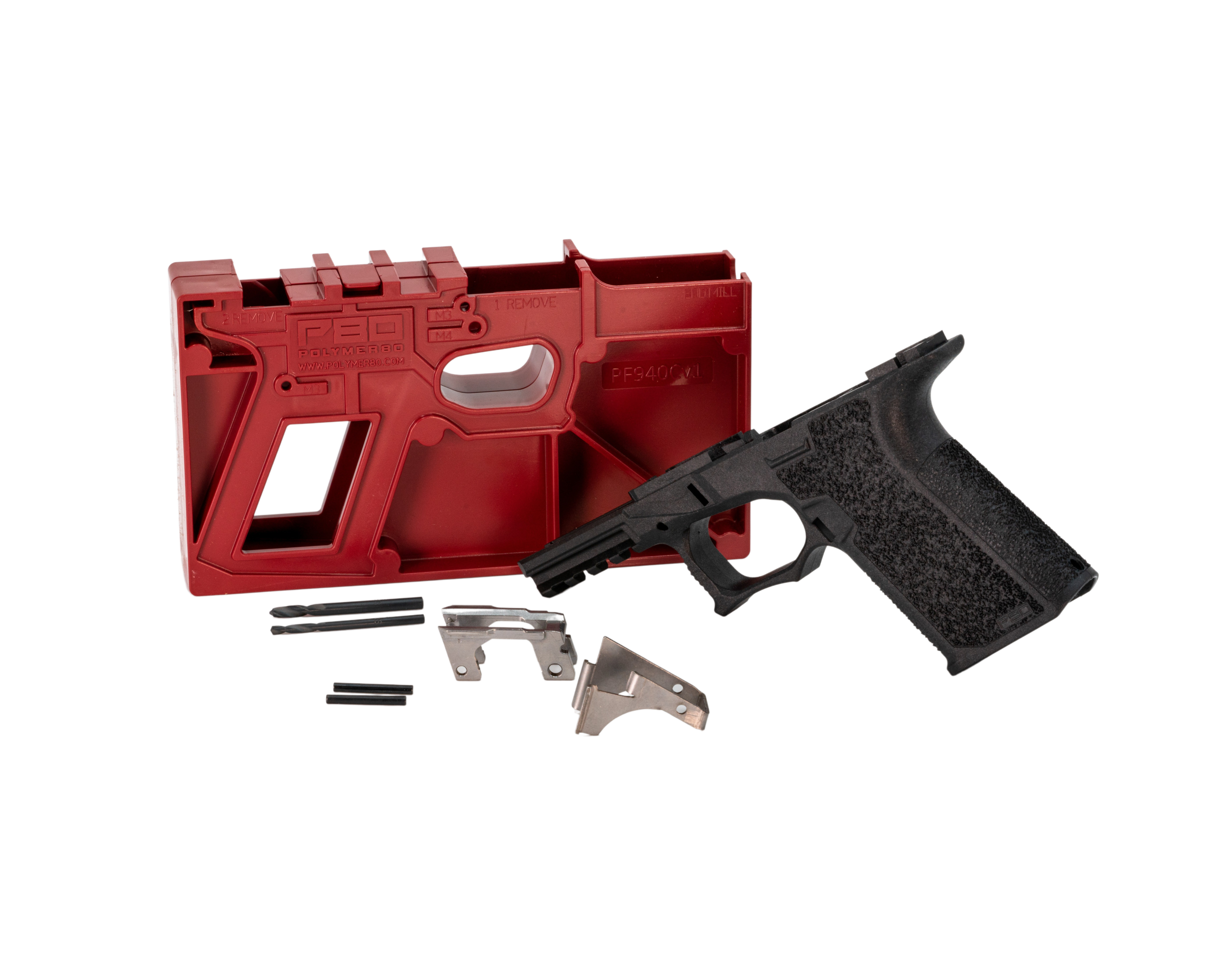
Operationally, this means the moment you complete the rear rail pocket and trigger pin hole with the right tools, you've created a firearm under federal law. This is the single most important fact to internalize. A clear, documented understanding of this point separates lawful builders from those facing potential felony charges. For a Gen3-compatible foundation that exemplifies this build process, our cornerstone product is the the Polymer80 PF940C 80% Compact Frame Kit – Glock 19/23 Compatible.
The ATF's 2024 Enforcement Focus & Polymer80-Specific Rulings
The ATF isn't targeting hobbyists with a single frame in their basement workshop. Their 2024 priority, as outlined in public enforcement summaries, is commercial-scale distribution of kits and jigs they deem to be 'readily convertible' firearms themselves—essentially, kits they believe are sold past the legal line. The famous 2021 enforcement action against Polymer80 was based on their 'Buy, Build, Shoot' kits, which the government argued were sold as functional firearm kits.
Recent updates: In early 2024, the ATF issued new Open Letters and Rulings clarifying their position on 'partially complete' frames. A key update for P80 builders is the clarified stance on 'solvent trap' style accessories that can be used to complete barrels. While not directly a frame ruling, it signals a broader 'pattern of parts' enforcement strategy. Possession of a P80 frame, a jig, a drill press, and certain other parts could be construed as 'constructive intent' if you lack a serialization or FFL path.
The most critical recent development isn't a new rule, but a judicial one: ongoing challenges to the 2022 Frame or Receiver Rule in federal appellate courts. While the rule stands, its application to products like ours is under active legal scrutiny. For builders, this means compliance must be based on the rule as it exists today, while keeping an eye on potential future changes.
A Measurement Breakdown: Comparing P80 Kits vs. ATF's 'Readily Converted' Spec
Here’s where you need concrete data. The ATF’s definition of 'readily' has been contested, but from a technical and practical workshop standpoint, we can define clear benchmarks. The primary conversion task is the drilling and milling of the fire control group pocket. Below is a direct comparison between a virgin P80 blank and the ATF's functional threshold, based on my micrometer measurements and build logs.
**ATF Functional Firearm Frame (Glock-pattern) Threshold:**\n- **Rear Rail Module Cavity Depth:** Must be 9.5mm minimum to seat a Gen3 rear rail module.\n- **Trigger Pin Hole Diameter:** Must be 3.5mm (+0.1mm/-0.0mm) to accept a standard trigger pin.\n- **Sear Spring Channel Depth:** Must be at least 4.0mm deep to properly seat and retain the spring leg.\n\n**Stock Polymer80 PF940C Blank (Pre-Work):**\n- **Rear Rail Module Cavity Depth:** ~2.0mm (a shallow guide impression).\n- **Trigger Pin Hole Diameter:** 0mm (solid polymer).\n- **Sear Spring Channel Depth:** 0mm (solid polymer).\n\n**Work Required to Reach Threshold:**\n- **Drilling/Milling Volume:** Approximately 1.8 cubic centimeters of polymer removal.\n- **Critical Tooling:** 3mm and 4mm drill bits, end mill or Dremel tool with router base.\n- **Jig Reliance:** Absolute. Freehand drilling will not achieve the required dimensional accuracy.\n- **My Average Build Time to Threshold:** 22 minutes with a drill press and proper fixturing (non-'readily' per some arguments). 95+ minutes with hand tools only (arguably not 'readily').
This data illustrates the gap. The ATF argues the jig and instructions make this process 'readily' achievable by a home builder. The defense argues the skill, tooling, and time required exceed the term 'readily.' As a builder, your process documentation should mirror this specificity.
Your Path Forward: Legal Builds, Serialization, and Product Selection
Building a Polymer80 frame remains 100% legal under federal law if you are not a prohibited person and you complete the manufacturing process for personal use (not for sale or distribution). Period. The legal safe harbor is clear process, clear intent, and compliance with your state's laws on homemade firearms. In many states, you are not required to serialize a personal-use firearm. However, an increasing number of states require serialization upon completion.
My strong recommendation for 2024: Proactively serialize your completed frame. This provides a clear, auditable line between a 'part' and a 'firearm.' Many local FFLs (07 manufacturers) offer this service. It creates a permanent record that you manufactured a firearm on a specific date, which can be critical if enforcement questions arise about the kit's status at the time of purchase. This isn't about fear; it's about creating an indisputable factual record.
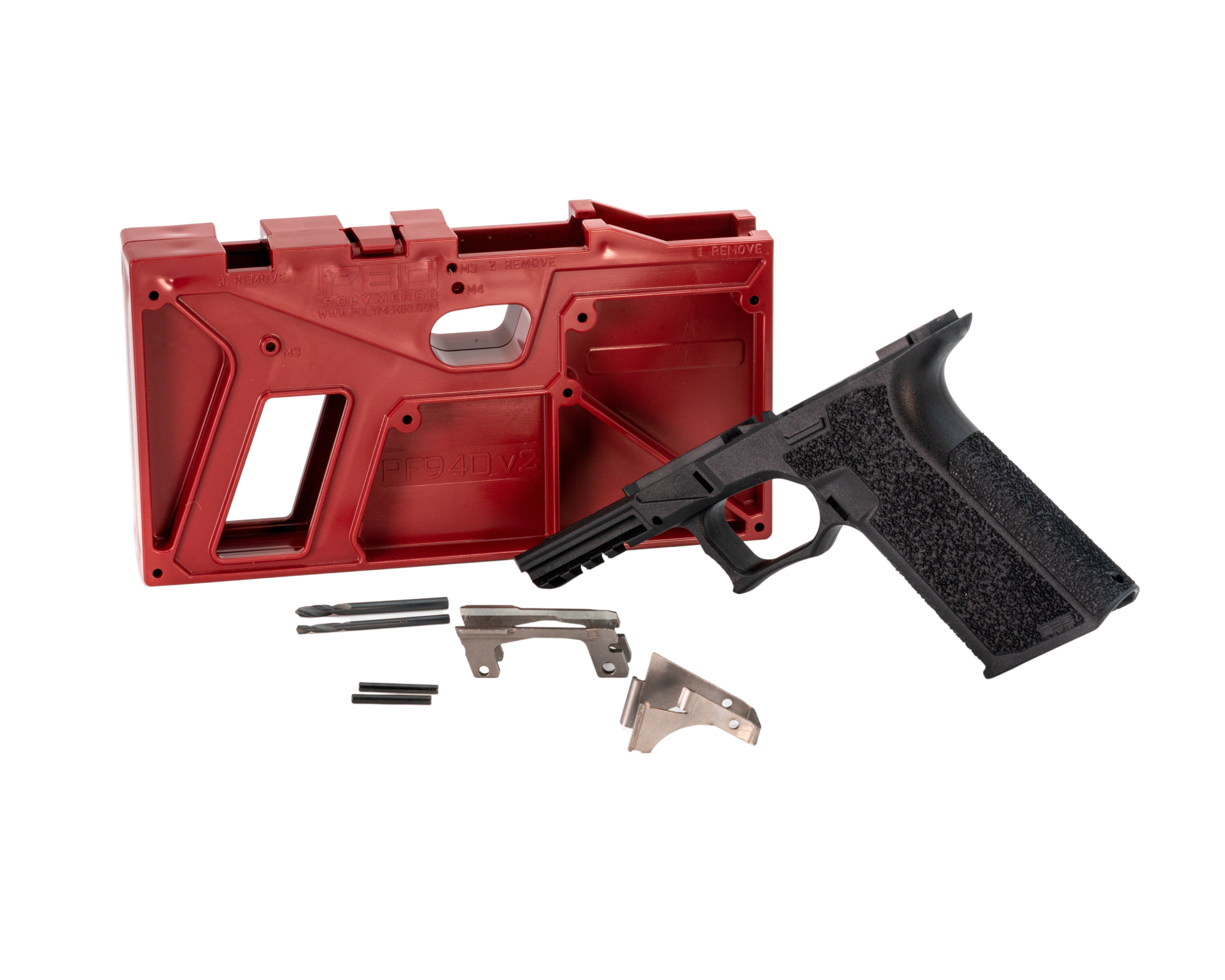
Choosing the right starting point is also a legal consideration. A bare frame, separate from a jig or parts kit, presents the clearest legal profile as an unfinished component. For builders who want to source their own quality parts separately, starting with just the frame itself is the most direct path. Consider the foundational see Polymer80 PF940V2 80% Full Size Bare Frame – Glock 17/22 Gen3 Compatible for a straightforward, unambiguous project start.
Common Missteps Builders Make (And How to Avoid Them)
**1. Assuming '80%' Is a Legal Shield:** It's not. The ATF evaluates the specific item in its condition at the time of sale. Calling something '80%' offers zero legal protection if the ATF determines it's 'readily convertible.' Base your decisions on the product's physical state, not its marketing name.
**2. Poor Documentation:** You must document your build. Take date-stamped photos of the frame in its 'as-received' state, next to the packaging label. Photograph each major machining step. Keep receipts for the frame, jig, and tools. This creates a timeline proving you performed the manufacturing act.
**3. Ignoring State Laws:** The federal rule is just the floor. States like California, New York, Illinois, Washington, and others have far more restrictive laws, often outright banning possession or requiring pre-approval. You are responsible for knowing and following your state and local laws. Federal legality does not equal state legality.
**4. Selling or Transferring Without an FFL:** Once you drill those holes, that frame is a firearm. You cannot sell it or give it to anyone else without going through a licensed dealer (FFL), just like any other firearm. This is the most common felony mistake I see.
Frequently asked questions
- Was the Polymer80 company found guilty?
- No. Polymer80 Inc. settled a civil enforcement action with the ATF in 2021, which included a fine and injunctive relief (agreement to stop selling certain kit configurations). This was not a criminal conviction. The company continues to operate and sell products compliant with the terms of that settlement and current rulings.
- Can I still legally buy a Polymer80 frame kit right now?
- Yes, you can legally purchase unfinished Polymer80 frames and separate jigs from reputable dealers. The legal sale hinges on the items being sold as separate components, not as a 'kit' the ATF would classify as a 'readily convertible' firearm. We sell frames and jigs separately to ensure compliance with this distinction.
- Do I need to serialize my finished Polymer80?
- Federal law does not require you to serialize a firearm you manufacture for personal use. However, an increasing number of states do require it. Furthermore, proactive serialization through an FFL is the single strongest action you can take to create a clear legal record of your manufacturing event, separating the 'part' from the 'firearm.' I recommend it for all builds in 2024.
- What's the difference between a 'frame' and a 'kit' in the ATF's eyes?
- Critically, a 'frame' (or 'receiver blank') is an unfinished component. A 'kit,' especially one marketed as 'Buy, Build, Shoot,' that includes the frame, jig, drill bits, and all fire control parts is what the ATF targeted. Their argument is that such a kit, sold together, constitutes a firearm because it contains everything 'readily' converted. Selling the frame alone, and the jig alone, maintains a legal separation.
- I live in a restrictive state. Can I have a kit shipped to an FFL?
- No. If an item is not legally a 'firearm' at the time of transfer (i.e., an unfinished 80% frame), an FFL cannot process it through their books. They only log serialized firearms. If your state bans possession of unfinished frames or 'ghost guns,' you cannot legally receive one, regardless of the channel. You must comply with your state law first.
Sources
- ATF Final Rule 2021R-05F, 'Definition of ‘Frame or Receiver’ and Identification of Firearms' — Bureau of Alcohol, Tobacco, Firearms and Explosives (ATF), U.S. Department of Justice
- Enforcement Report on Polymer80 Inc. Settlement and Related Open Letters — ATF Los Angeles Field Division Public Affairs
- Federal Court Docket for Challenges to ATF Frame or Receiver Rule (e.g., VanDerStok v. Garland) — United States Court of Appeals for the Fifth Circuit
AI-assisted draft, edited by Garrett Vance.